KNPS Field Trip to Scott’s Gap, Jefferson Memorial Forest – October 10, 2026

Date of trip: 10/10/2026
Time: 10AM Eastern Time
Location: Scott’s Gap, Jefferson Memorial Forest, Jefferson Co., KY
Difficulty of hike: Strenuous

Quercus marilandica from the trail

Join KNPS Field Trip Chair Alan Abbott for a hike in the Scott’s Gap section of Jefferson Memorial Forest. The hike explores some unusual xeric ridges within Metro Louisville. 

In the driest parts, hikers will see Blackjack (Quercus marilandica) and Chinkapin Oaks (Quercus muehlenbergii), as well as Blueberries (Vaccinium sp.), Goldenrods (Solidago sp.), False Floxgloves (Agalinis sp.), and Dittany (Cunila origanoides). The trail provides some scenic views of south Louisville.

While the hike will only be two to three total miles, it will be strenuous, especially as the group follows the trail to the top of the knob. Participants should bring sturdy shoes, water and a snack, as well as tick protection.   

Continue reading KNPS Field Trip to Scott’s Gap, Jefferson Memorial Forest – October 10, 2026
From the Lady Slipper Archives: Aristolochiaceae: Insects, Humans and the Birthwort Family

The Lady Slipper newsletter, and now blog, of the Kentucky Native Plant Society has been published since the Society’s founding in 1986. We occasionally feature an article from a past issue. In this article from 2007, Amy McIntosh discusses members of the Birthwort Family, Aristolochiaceae . This article ran in Vol. 22, No. 2. If you would like to see these and other past issues, visit the Lady Slipper Archives, where all issues from Vol. 1, February 1986 to Vol. 40, 2025, can be found.


Aristolochiaceae: Insects, Humans and the Birthwort Family

by Amy McIntosh

Introduction

Members of the Birthwort Family, Aristolochiaceae, have a complex array of relationships with insects and humans. Interactions with pollinators, non-pollinating butterflies, and seed/fruit dispersers (along with the plants’ pollination mechanisms and the creation and use aromatic oils) provide insight into the family’s co-evolution with insects.

Human relationships with the birthwort family have a long history involving herbal and food use. Current interests in the family include collection of garden and greenhouse specimens, breeding of ornamental varieties and determining effectiveness of possible anticancer chemicals within some species. Human degradation of habitat in areas of endemic and otherwise limited populations has threatened 35 species at last count.

Continue reading From the Lady Slipper Archives: Aristolochiaceae: Insects, Humans and the Birthwort Family

2026 Pollinator Garden Grant Winners

By David Taylor

This photo shows a planting of native flowers.

Kentucky Native Plant Society is pleased to announce the recipients of 2026 Pollinator Garden Grants. These grants will help the recipients purchase native pollinator plants, seeds or both to set up a pollinator garden. These gardens will allow various audiences the opportunity to see native pollinator plants and the pollinators they serve. Hopefully visitors to the gardens will be inspired to install a pollinator garden of their own or incorporate some native pollinator plants into home landscapes.

The 2026 Pollinator Garden Grant recipients are, in no particular order,

Debbie Brown, Good Shepherd Catholic School
Frankfort, KY  40601

Richard Olson, Sustainable Berea
Berea KY 40403

Charlie Combs, Louisville Nature Center
Louisville, KY

Christine Argus, Lake View Park
Sponsored by Franklin County Solid Waste
Frankfort, KY 40601

Mary Jewell, New Haven Head Start
New Haven, KY 40051

KNPS will be announcing the pollinator garden grant application period in the spring. Watch the KNPS newsletter, The Lady’s-slipper for details.

From the Lady Slipper Archives: Sweet fern—A rare Kentucky shrub with an interesting history

The Lady Slipper newsletter, and now blog, of the Kentucky Native Plant Society has been published since the Society’s founding in 1986. We occasionally feature an article from a past issue. In this article from 2011, Tara Littlefield discusses the rare Kentucky shrub, sweet fern (Comptonia peregrina) . This article ran in Vol. 26, No. 1. If you would like to see these and other past issues, visit the Lady Slipper Archives, where all issues from Vol. 1, February 1986 to Vol. 40, 2025, can be found.

Sweet fern—A rare Kentucky shrub with an interesting history

By Tara Littlefield, Office of Kentucky Nature Preserves

Comptonia peregrina, OKNP file photo

The wax myrtle or bayberry family (Myricaceae) is known for its odor. These plants have resinous dots on their leaves, making their leaves aromatic. Plants in this family have a wide distribution, including Africa, Asia, Europe, North America and South America, missing only from Australasia. Myricaceae members are mostly shrubs to small trees and often grow in xeric or swampy acidic soils. More familiar members of the wax myrtle family include many in the Genus Myrica (sweet gale, wax myrtle), some of which are used as ornamentals and are economically important. In addition, the wax coating on the fruit of several species of Myrica, has been used traditionally to make candles.

So what does this interesting family have in common with Kentucky’s flora? We are lucky to have just one species in the wax myrtle family, Sweet fern (Comptonia peregrina). In addition, it is also a monotypic genus restricted to eastern North America. This means that the genus Comptonia has only one species (C. peregrina) worldwide, and just happens to be found here in KY! Of course the common name sweet fern is misleading. This woody shrub is certainly not a fern. However, the leaves have a similar shape to pinnules of a fern frond (leaf). But having sweet in the common name is no mistake. If you crush the leaves throughout the growing season, a lovely smell is emitted as the essential oils volatilize into the air.

Continue reading From the Lady Slipper Archives: Sweet fern—A rare Kentucky shrub with an interesting history

Fifth Annual Kentucky Botanical Symposium Videos

Coming together to discuss current botanical projects, conservation, and collaboration in Kentucky and beyond”

On Wednesday, January 14, 2026, the Kentucky Native Plant Society and the Office of Kentucky Nature Preserves held our 5th annual, virtual, Botanical Symposium. Close to 200 folks were able to attend online to hear and see several presentations about our native plants and plant communities. We know that there are many who would have liked to participate, but were not able to do so. Below are videos of all of the presentations.

Continue reading Fifth Annual Kentucky Botanical Symposium Videos

From the Lady Slipper Archives: The Pleasing Persimmon

The Lady Slipper newsletter, and now blog, of the Kentucky Native Plant Society has been published since the Society’s founding in 1986. We occasionally feature an article from a past issue. In this article from 2007, Maggie Whitson discusses the botany of the American persimmon (Diospyros virginiana). This article ran in Vol. 22, No. 1. If you would like to see these and other past issues, visit the Lady Slipper Archives, where all issues from Vol. 1, February 1986 to Vol. 40, 2025, can be found.

The Pleasing Persimmon

by Maggie Whitson

With large orange fruit dangling from bare branches like Halloween ornaments, the American persimmon (Diospyros virginiana L.) puts on a striking late fall display along our fields and roadsides. The numerous sweet fruits were notable enough to find their way into the genus name, which means “fruit (-pyros) of the gods (dios).”

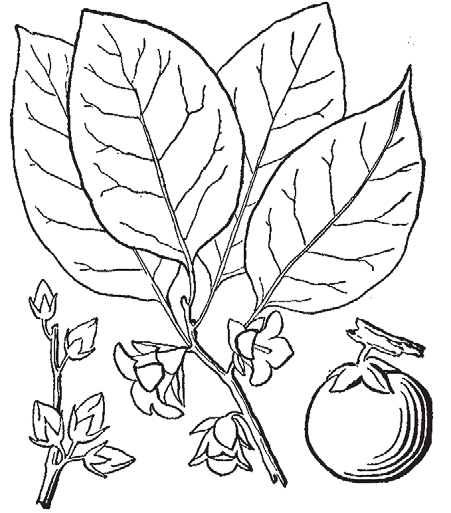
Drawing of American Persimmon, Britton and Brown

Persimmons are common in Kentucky and occur throughout the state. The species is found as far south as Florida and ranges up the Gulf Coast to Connecticut. It laps from the Southeast on to the Midwest and peters out around eastern Texas. Like many widespread plants, persimmons have a variety of common names, ranging from picturesque to puzzling. To list a few: dateplum, seeded-plum, winter-plum, simmon, lotus-tree, Jove’s fruit, and possum-wood.

Though the typical persimmon has a trunk ranging from about 6″ to 24″ in diameter, given optimum growing conditions and plenty of time, they can get much larger. Kentucky’s champion persimmon is located in Ballard County, and is 113.5 inches around, or about 36″ wide. The U.S. champion tree is in Portsmouth, Ohio, and is a whopping 142″ in circumference and 82 feet high.

Continue reading From the Lady Slipper Archives: The Pleasing Persimmon

KNPS Wildflower Week 2026 Botany Blitz Results

We had another awesome week of wildflower appreciation during KNPS’s 6th annual Botany Blitz! The Botany Blitz is a wildflower-focused bioblitz where participants try to document as many plant species as possible during the week before Wildflower Weekend. This year’s Blitz ran from April 11 through April 19. As in previous years, the Botany Blitz was hosted on the iNaturalist platform, which makes it easy for participants to document, share, and identify their observations through iNaturalist’s website and mobile app. We also hosted a series of “Kick Off Hikes” across the state again this year: on Saturday April 11, and Sunday April 12, several local naturalists and experienced iNaturalist users led guided hikes in preserves, parks, and other natural areas across the Commonwealth. Many thanks to the hike leaders for helping us kick off the Blitz!

This year was a great year for observations, with 50 observers making 3,511 observations of plants in 742 species, the largest number of species every observed during Botany Blitz. Observations were made across the Commonwealth, from the mountains of eastern Kentucky to the grasslands and oak-hickory forests of the Jackson Purchase. Observations were made in 45 counties in the state. In the map below, every orange square is a location where observations were made.

You can see all 3,511 observations at the KNPS Wildflower Week 2026 Botany Blitz page. Here are a few notable observations.