From the Lady Slipper Archives: Aristolochiaceae: Insects, Humans and the Birthwort Family

The Lady Slipper newsletter, and now blog, of the Kentucky Native Plant Society has been published since the Society’s founding in 1986. We occasionally feature an article from a past issue. In this article from 2007, Amy McIntosh discusses members of the Birthwort Family, Aristolochiaceae . This article ran in Vol. 22, No. 2. If you would like to see these and other past issues, visit the Lady Slipper Archives, where all issues from Vol. 1, February 1986 to Vol. 40, 2025, can be found.


Aristolochiaceae: Insects, Humans and the Birthwort Family

by Amy McIntosh

Introduction

Members of the Birthwort Family, Aristolochiaceae, have a complex array of relationships with insects and humans. Interactions with pollinators, non-pollinating butterflies, and seed/fruit dispersers (along with the plants’ pollination mechanisms and the creation and use aromatic oils) provide insight into the family’s co-evolution with insects.

Human relationships with the birthwort family have a long history involving herbal and food use. Current interests in the family include collection of garden and greenhouse specimens, breeding of ornamental varieties and determining effectiveness of possible anticancer chemicals within some species. Human degradation of habitat in areas of endemic and otherwise limited populations has threatened 35 species at last count.

Continue reading From the Lady Slipper Archives: Aristolochiaceae: Insects, Humans and the Birthwort Family
From the Lady Slipper Archives: Sweet fern—A rare Kentucky shrub with an interesting history

The Lady Slipper newsletter, and now blog, of the Kentucky Native Plant Society has been published since the Society’s founding in 1986. We occasionally feature an article from a past issue. In this article from 2011, Tara Littlefield discusses the rare Kentucky shrub, sweet fern (Comptonia peregrina) . This article ran in Vol. 26, No. 1. If you would like to see these and other past issues, visit the Lady Slipper Archives, where all issues from Vol. 1, February 1986 to Vol. 40, 2025, can be found.

Sweet fern—A rare Kentucky shrub with an interesting history

By Tara Littlefield, Office of Kentucky Nature Preserves

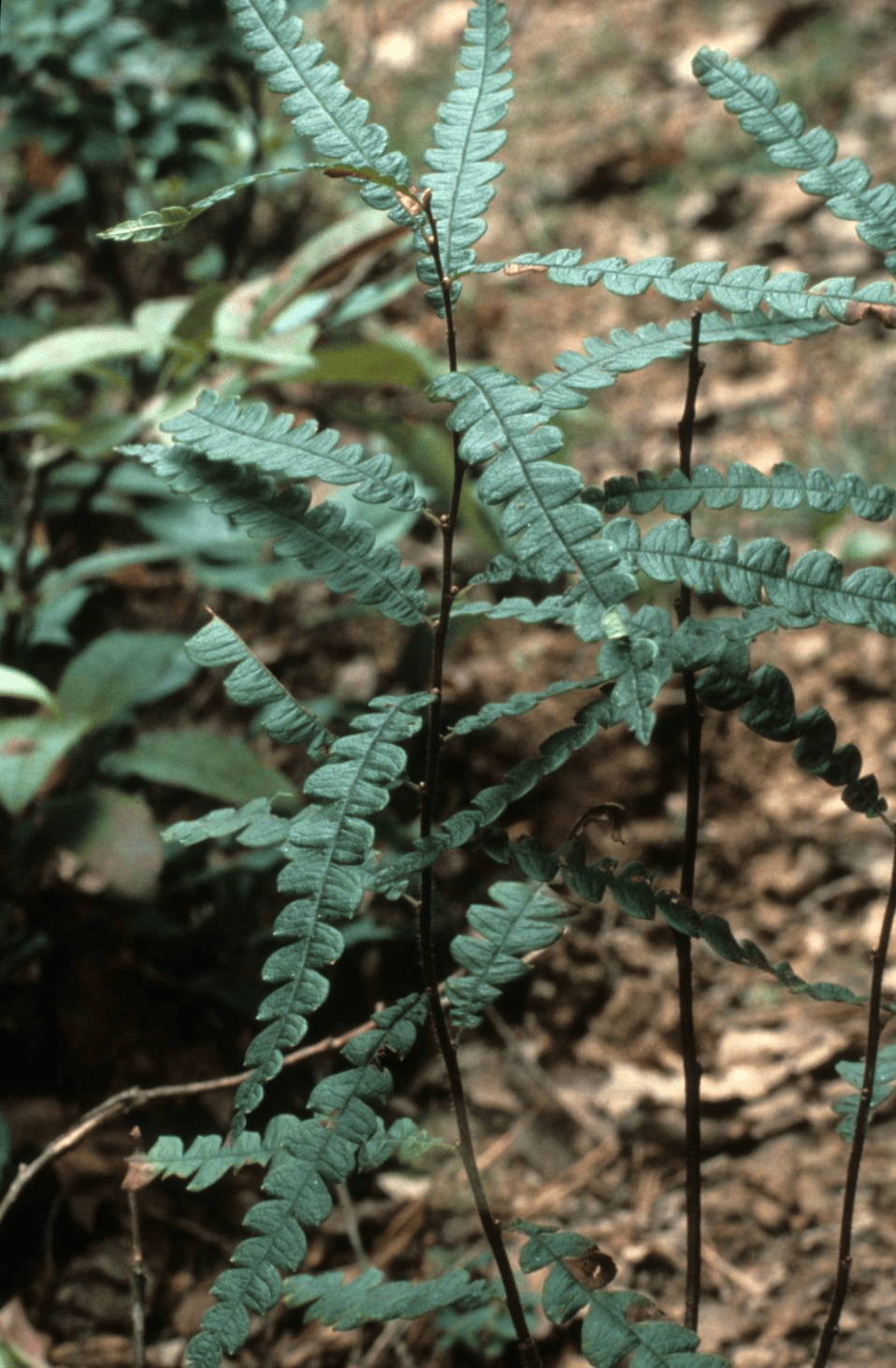
Comptonia peregrina, OKNP file photo

The wax myrtle or bayberry family (Myricaceae) is known for its odor. These plants have resinous dots on their leaves, making their leaves aromatic. Plants in this family have a wide distribution, including Africa, Asia, Europe, North America and South America, missing only from Australasia. Myricaceae members are mostly shrubs to small trees and often grow in xeric or swampy acidic soils. More familiar members of the wax myrtle family include many in the Genus Myrica (sweet gale, wax myrtle), some of which are used as ornamentals and are economically important. In addition, the wax coating on the fruit of several species of Myrica, has been used traditionally to make candles.

So what does this interesting family have in common with Kentucky’s flora? We are lucky to have just one species in the wax myrtle family, Sweet fern (Comptonia peregrina). In addition, it is also a monotypic genus restricted to eastern North America. This means that the genus Comptonia has only one species (C. peregrina) worldwide, and just happens to be found here in KY! Of course the common name sweet fern is misleading. This woody shrub is certainly not a fern. However, the leaves have a similar shape to pinnules of a fern frond (leaf). But having sweet in the common name is no mistake. If you crush the leaves throughout the growing season, a lovely smell is emitted as the essential oils volatilize into the air.

Continue reading From the Lady Slipper Archives: Sweet fern—A rare Kentucky shrub with an interesting history

From the Lady Slipper Archives: The Pleasing Persimmon

The Lady Slipper newsletter, and now blog, of the Kentucky Native Plant Society has been published since the Society’s founding in 1986. We occasionally feature an article from a past issue. In this article from 2007, Maggie Whitson discusses the botany of the American persimmon (Diospyros virginiana). This article ran in Vol. 22, No. 1. If you would like to see these and other past issues, visit the Lady Slipper Archives, where all issues from Vol. 1, February 1986 to Vol. 40, 2025, can be found.

The Pleasing Persimmon

by Maggie Whitson

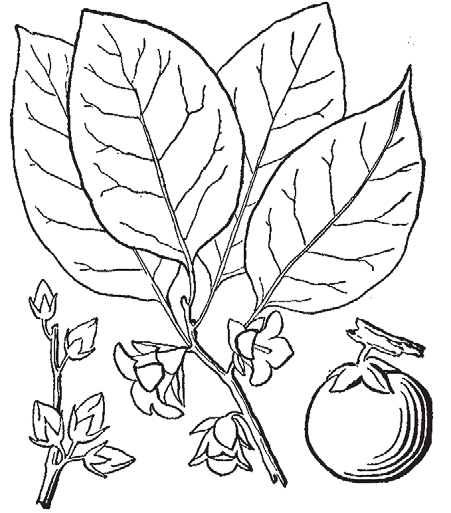
With large orange fruit dangling from bare branches like Halloween ornaments, the American persimmon (Diospyros virginiana L.) puts on a striking late fall display along our fields and roadsides. The numerous sweet fruits were notable enough to find their way into the genus name, which means “fruit (-pyros) of the gods (dios).”

Drawing of American Persimmon, Britton and Brown

Persimmons are common in Kentucky and occur throughout the state. The species is found as far south as Florida and ranges up the Gulf Coast to Connecticut. It laps from the Southeast on to the Midwest and peters out around eastern Texas. Like many widespread plants, persimmons have a variety of common names, ranging from picturesque to puzzling. To list a few: dateplum, seeded-plum, winter-plum, simmon, lotus-tree, Jove’s fruit, and possum-wood.

Though the typical persimmon has a trunk ranging from about 6″ to 24″ in diameter, given optimum growing conditions and plenty of time, they can get much larger. Kentucky’s champion persimmon is located in Ballard County, and is 113.5 inches around, or about 36″ wide. The U.S. champion tree is in Portsmouth, Ohio, and is a whopping 142″ in circumference and 82 feet high.

Continue reading From the Lady Slipper Archives: The Pleasing Persimmon

From the Lady Slipper Archives: Kentucky’s Common Milkweed (Asclepias syriaca L.)

The Lady Slipper newsletter, and now blog, of the Kentucky Native Plant Society has been published since the Society’s founding in 1986. We occasionally feature an article from a past issue. In this article from 2011, KNPS Board Member David Taylor, discusses one of Kentucky’s most widespread milkweed, common milkweed (Asclepias syriaca). This article ran in Vol. 26, No. 3. If you would like to see these and other past issues, visit the Lady Slipper Archives, where all issues from Vol. 1, February 1986 to Vol. 39, 2024, can be found.

Kentucky’s Common Milkweed (Asclepias syriaca L.)

By David Taylor, US Forest Service

Whole plant with flowers

Common milkweed is a perennial forb that spreads by means of rhizomes and seed. It is one of about 115 species that occur in the Americas. Most species are tropical or arid land species. Plants may occur as a few individuals, but once established, form small to large colonies. Individual plants range from 1 to 2 m (~ 3 to 6 ft) tall. Leaves are elliptic to ovate to oblong and somewhat thick. Mature leaves are 15-20 cm (6-8 in) long and 5 to 9 cm (~ 2 to 3.6 in) wide, with a prominent midvein. The underside of the leaf is frequently finely pubescent. The stem is stout, usually simple, and green to black (see below) in color. When broken, the leaves, as well as stem and fruit, exude milky latex. Flowers are purplish to rosy pink to mostly white or even greenish and about 2 cm (0.75 in) long and 1 cm (0.4 in) wide. They occur in semi-spherical umbels (umbrella-like clusters) in the upper leaf axils. Flowers are somewhat complex in their structure, with structures not found in the average flower (see Cut Flower Exports of Africa – Asclepias). The flowers are strongly and sweetly scented. The fruits (pods), known as follicles, are formed from the union of multiple flowers. They are green, covered in soft spiky projections and are finely pubescent. When the seeds are mature, the follicle splits exposing the seeds. Each seed is equipped with a coma, a soft group of hairs. As the newly exposed seeds dry, the hairs of the coma expand allowing the seed to catch a ride on the wind. When broken, the leaves, as well as stem and fruit, exude milky latex.

Continue reading From the Lady Slipper Archives: Kentucky’s Common Milkweed (Asclepias syriaca L.)

From the Lady Slipper Archives: The Curious Case of the Disappearing Asters . . .

The Lady Slipper newsletter, and now blog, of the Kentucky Native Plant Society has been published since the Society’s founding in 1986. We occasionally feature an article from a past issue. In this article from 2004, Alan Weakley, looks at the taxonomic changes in the 1990s that moved American asters out of the Eurasian genus Aster into several American genera . This article ran in Vol. 19, No. 3. If you would like to see these and other past issues, visit the Lady Slipper Archives, where all issues from Vol. 1, February 1986 to Vol. 39, 2024, can be found.

The Curious Case of the Disappearing Asters . . .

by Alan Weakley

Reprinted with permission of the author from the North Carolina Botanical Garden Newsletter 32(2). March-April 2004.

Would an aster by any other name look as showy?

One dark and stormy night in 1994 I was awakened from a deep sleep by a loud thump. Creeping carefully down the stairs, I discovered to my astonishment that a large bouquet of Aster on the dining table had disappeared! In its place was a cornucopia of composites, including Symphyotrichum, lonactis, Eurybia, Sericocarpus, Doellingeria, Ampelaster, and Oclemena! Once again, a plant taxonomist had struck in dark of night, taken a simple two- syllable genus with the same English common name, and replaced it with a handful of four- and five-syllable Latin tongue-twisters. Whatever can we do about such things?

The classification of living things is based on the principle that each taxonomic unit (for instance the Composite or Aster Family, the genus Aster, or a species) groups together things that are most closely related to one another, and that the group should not also contain things which are disparate, unrelated, or more closely related to another group.

The concept of the genus Aster has had a long history of controversy and confusion. Asa Gray, the most influential nineteenth-century North American botanist, struggled with Aster at all levels, from its circumscription (what to include in it), to the taxonomy of the component species. Late in his life, he wrote:

“I am half dead with Aster. I got on very fairly until I got to the thick of the genus, around what I call the Dumosi and Salicifolia. Here I work and work, but make no headway at all. I can’t tell what are species and [sic] how to define any of them …. I was never so boggled …If you hear of my breaking down utterly, and being sent to an asylum, you may lay it to Aster, which is a slow and fatal poison.”

Continue reading From the Lady Slipper Archives: The Curious Case of the Disappearing Asters . . .

From the Lady Slipper Archives: Gentians: All Fall Color is Not Red, Yellow and Orange

The Lady Slipper newsletter, and now blog, of the Kentucky Native Plant Society has been published since the Society’s founding in 1986. We occasionally feature an article from a past issue. In this article from 2010, the late Tom Barnes, wildflower photographer and former president of Kentucky, takes an in-depth look at the gentians (Gentianaceae family) . This article ran in Vol. 25, No. 4. If you would like to see these and other past issues, visit the Lady Slipper Archives, where all issues from Vol. 1, February 1986 to Vol. 39, 2024, can be found.

Gentians: All Fall Color is Not Red, Yellow and Orange

Thomas G. Barnes, Ph.D.
Extension Wildlife Specialist, Department of Forestry, University of Kentucky

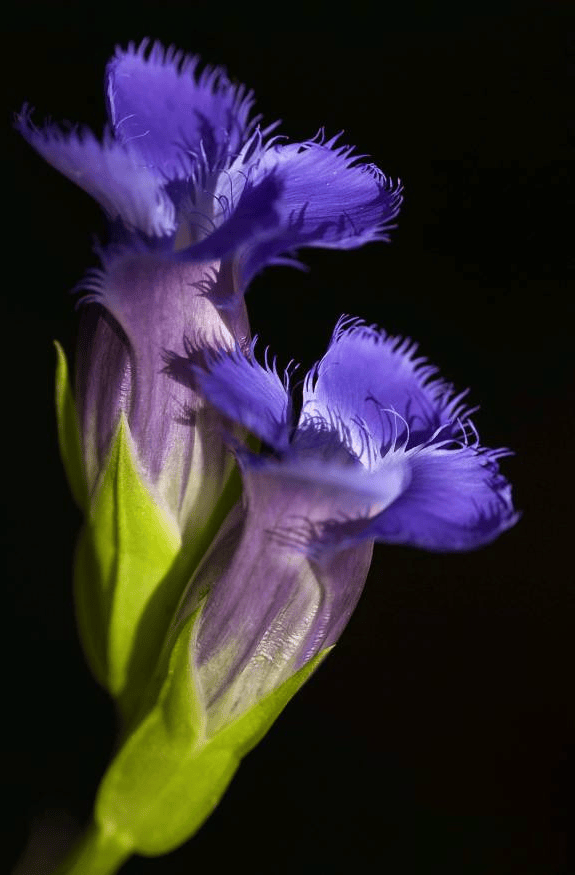
Gentianopsis crinita by Tom Barnes

Fall is the time of the year when the leaf peepers begin their road trips across the Commonwealth in search of reds, yellows, oranges, and other colors in the tree canopy. For wildflower enthusiasts it is a time of the year when they think of other activities since the goldenrods and asters are done flowering and the drabness of winter is quickly approaching. For those who do love searching for unique wildflowers, like so many do for our native orchids, this is the time of the year to search for fall flowering members of the gentian family, those that typically have beautiful blue flowers. When you think of the rarity of the native orchids found in Kentucky, approximately 38% are listed as rare, special concern, threatened or endangered. Of the fall gentians, 68% fall in those same categories. So if looking for rare plants is your venue, then the fall gentians are an excellent group to focus on. I hope to share with you some information about gentians in general and then which species can be found in Kentucky.

Continue reading From the Lady Slipper Archives: Gentians: All Fall Color is Not Red, Yellow and Orange

A Unique Milkweed, Asclepias perennis

Jeff Nelson, KNPS President

Adult monarch (Danaus plexippus) feeding on rose milkweed (Asclepias incarnata)

Over the last several years, we have seen an explosion of interest in the growing of native milkweed plants (Asclepias genus), largely driven by the plight of the iconic monarch butterfly (Danaus plexippus). As most of us are aware, monarch caterpillars only host on milkweeds. Without milkweed leaves to feed on, monarch caterpillars cannot not survive.

Asclepias is a genus of herbaceous, perennial, flowering plants known as milkweeds, named for their latex, a milky substance containing cardiac glycosides termed cardenolides, exuded where cells are damaged. Most species are toxic to humans and many other species, primarily due to the presence of cardenolides.

Continue reading A Unique Milkweed, Asclepias perennis