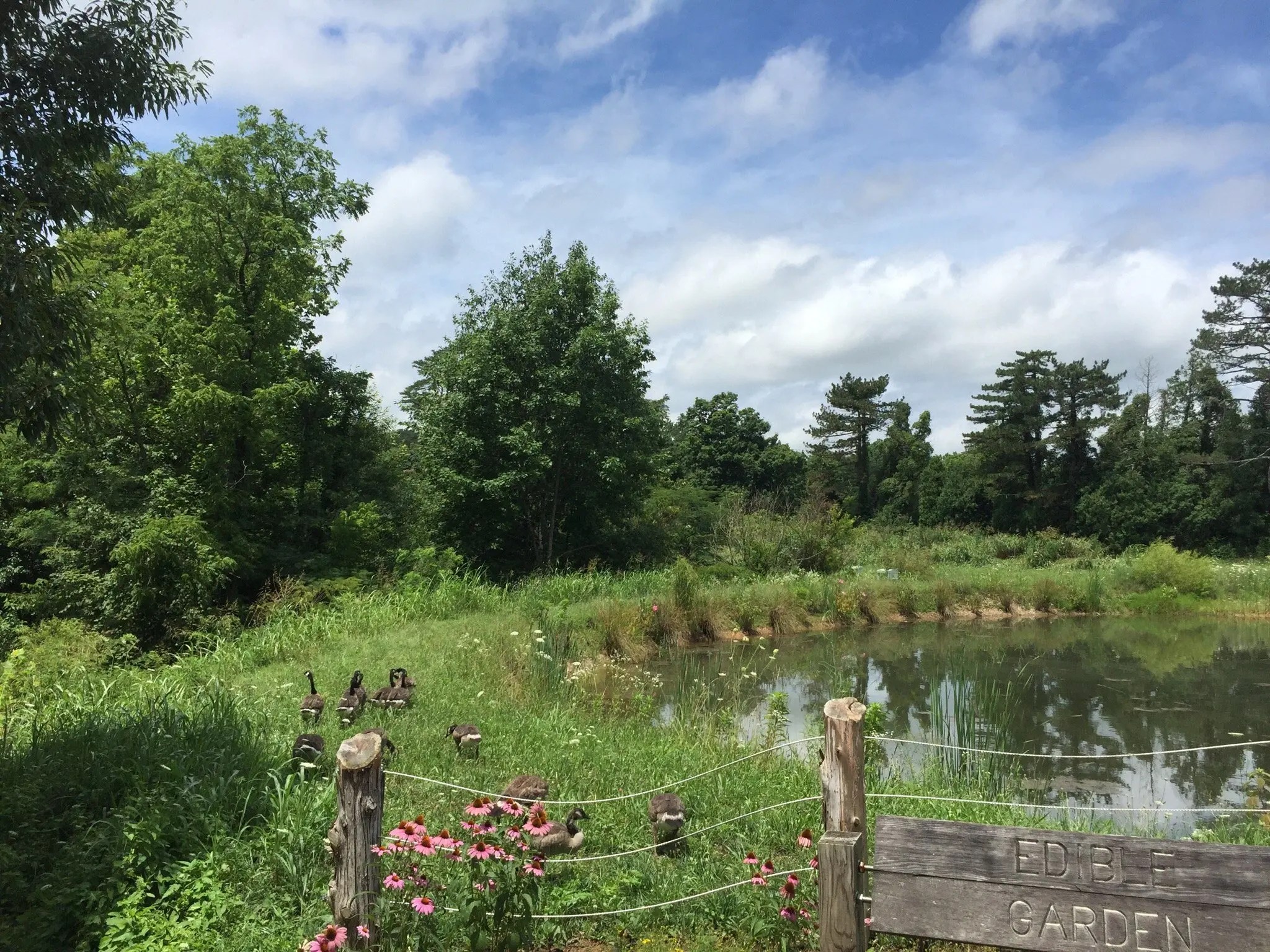
Kentucky Native Plant Society is pleased to announce the recipients of 2026 Pollinator Garden Grants. These grants will help the recipients purchase native pollinator plants, seeds or both to set up a pollinator garden. These gardens will allow various audiences the opportunity to see native pollinator plants and the pollinators they serve. Hopefully visitors to the gardens will be inspired to install a pollinator garden of their own or incorporate some native pollinator plants into home landscapes.
The 2026 Pollinator Garden Grant recipients are, in no particular order,
Debbie Brown, Good Shepherd Catholic School Frankfort, KY 40601
Richard Olson, Sustainable Berea Berea KY 40403
Charlie Combs, Louisville Nature Center Louisville, KY
Christine Argus, Lake View Park Sponsored by Franklin County Solid Waste Frankfort, KY 40601
Mary Jewell, New Haven Head Start New Haven, KY 40051
KNPS will be announcing the pollinator garden grant application period in the spring. Watch the KNPS newsletter, The Lady’s-slipper for details.
The Lady Slipper newsletter, and now blog, of the Kentucky Native Plant Society has been published since the Society’s founding in 1986. We occasionally feature an article from a past issue. In this article from 2011, Tara Littlefield discusses the rare Kentucky shrub, sweet fern (Comptonia peregrina) . This article ran in Vol. 26, No. 1. If you would like to see these and other past issues, visit the Lady Slipper Archives, where all issues from Vol. 1, February 1986 to Vol. 40, 2025, can be found.
Sweet fern—A rare Kentucky shrub with an interesting history
By Tara Littlefield, Office of Kentucky Nature Preserves
Comptonia peregrina, OKNP file photo
The wax myrtle or bayberry family (Myricaceae) is known for its odor. These plants have resinous dots on their leaves, making their leaves aromatic. Plants in this family have a wide distribution, including Africa, Asia, Europe, North America and South America, missing only from Australasia. Myricaceae members are mostly shrubs to small trees and often grow in xeric or swampy acidic soils. More familiar members of the wax myrtle family include many in the Genus Myrica (sweet gale, wax myrtle), some of which are used as ornamentals and are economically important. In addition, the wax coating on the fruit of several species of Myrica, has been used traditionally to make candles.
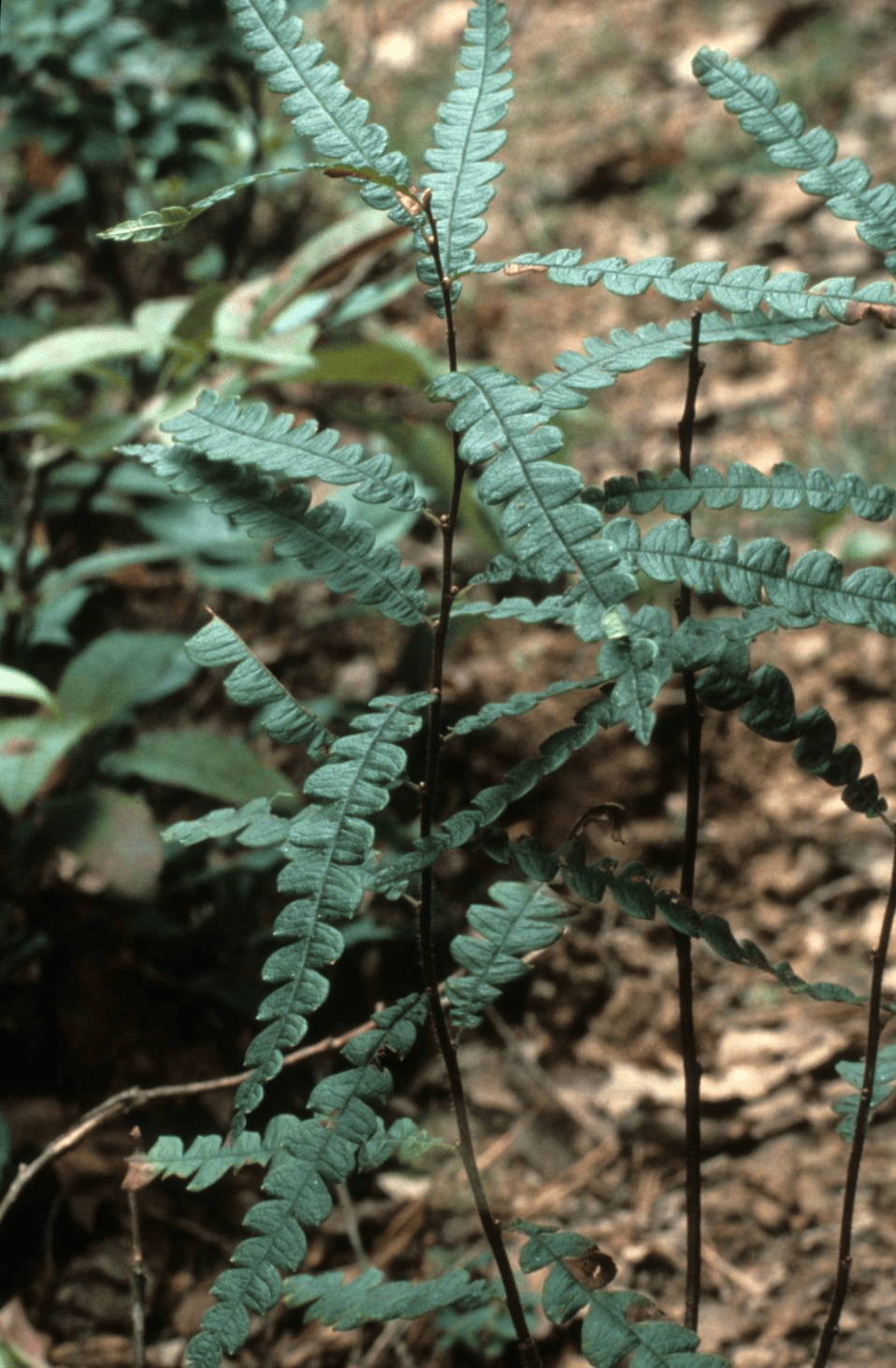
So what does this interesting family have in common with Kentucky’s flora? We are lucky to have just one species in the wax myrtle family, Sweet fern (Comptonia peregrina). In addition, it is also a monotypic genus restricted to eastern North America. This means that the genus Comptonia has only one species (C. peregrina) worldwide, and just happens to be found here in KY! Of course the common name sweet fern is misleading. This woody shrub is certainly not a fern. However, the leaves have a similar shape to pinnules of a fern frond (leaf). But having sweet in the common name is no mistake. If you crush the leaves throughout the growing season, a lovely smell is emitted as the essential oils volatilize into the air.
“Coming together to discuss current botanical projects, conservation, and collaboration in Kentucky and beyond”
On Wednesday, January 14, 2026, the Kentucky Native Plant Society and the Office of Kentucky Nature Preserves held our 5th annual, virtual, Botanical Symposium. Close to 200 folks were able to attend online to hear and see several presentations about our native plants and plant communities. We know that there are many who would have liked to participate, but were not able to do so. Below are videos of all of the presentations.
The Lady Slipper newsletter, and now blog, of the Kentucky Native Plant Society has been published since the Society’s founding in 1986. We occasionally feature an article from a past issue. In this article from 2007, Maggie Whitson discusses the botany of the American persimmon (Diospyros virginiana). This article ran in Vol. 22, No. 1. If you would like to see these and other past issues, visit the Lady Slipper Archives, where all issues from Vol. 1, February 1986 to Vol. 40, 2025, can be found.
The Pleasing Persimmon
by Maggie Whitson
With large orange fruit dangling from bare branches like Halloween ornaments, the American persimmon (Diospyros virginiana L.) puts on a striking late fall display along our fields and roadsides. The numerous sweet fruits were notable enough to find their way into the genus name, which means “fruit (-pyros) of the gods (dios).”
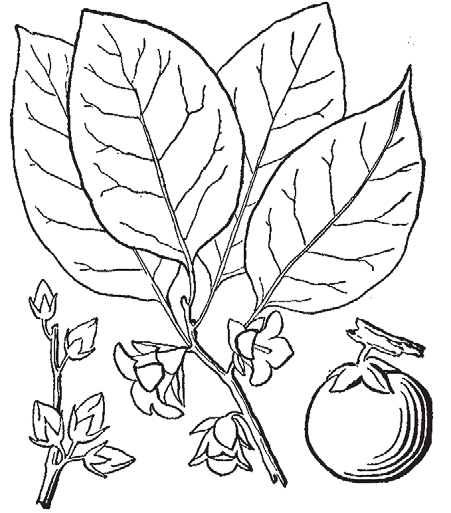
Drawing of American Persimmon, Britton and Brown
Persimmons are common in Kentucky and occur throughout the state. The species is found as far south as Florida and ranges up the Gulf Coast to Connecticut. It laps from the Southeast on to the Midwest and peters out around eastern Texas. Like many widespread plants, persimmons have a variety of common names, ranging from picturesque to puzzling. To list a few: dateplum, seeded-plum, winter-plum, simmon, lotus-tree, Jove’s fruit, and possum-wood.
Though the typical persimmon has a trunk ranging from about 6″ to 24″ in diameter, given optimum growing conditions and plenty of time, they can get much larger. Kentucky’s champion persimmon is located in Ballard County, and is 113.5 inches around, or about 36″ wide. The U.S. champion tree is in Portsmouth, Ohio, and is a whopping 142″ in circumference and 82 feet high.
On the weekend of April 17th to April 19th, over 200 members and friends enjoyed KNPS’s Wildflower Weekend at Natural Bridge SRP! KNPS was proud to host 31 hikes/workshops for all ages, our second annual Student Research Poster Sessions, a celebration of KNPS’s 40th anniversary, and have two excellent speakers Saturday evening. Many of the best botanists in Kentucky were in attendance, along with previous KNPS officers and board members, devoted members and new friends, making Wildflower Weekend 2026 an unqualified success.
Wildflower Weekend 2026 Logo Contest
Alexandra Taylor, winner of WW26 Logo Contest
This is the fourth consecutive year that KNPS offered merchandise with a unique logo developed specifically for Wildflower Weekend via the Wildflower Weekend 2026 Logo Design Contest. This was an open design contest to come up with a logo for Wildflower Weekend 2026. The winning design (featured at the top left of this post) is a collection of pink Lady slippers (Cypripedium acaule). The winning design was submitted by Alexandra Taylor of Fayette County, KY.
Wildflower Weekend Hikes and Workshops
Hike leaders and co-leaders highlighted the botanical diversity of Natural Bridge SRP with many hikes covering the weekend’s classic subjects: woody plants, wildflowers, bryophytes and ferns. Additionally, the weekend offered a variety of more beginner and advanced botanical hikes, featuring subjects such as the wildflowers and geology, evolutionary relationships of wildflowers and ferns, hemlock ecology and treatment, spring wildflowers and their bug friends, and lichens.
As participants attended their hikes, they were also able to see the beautiful natural features Natural Bridge has to offer due to its sandstone geology. The weekend featured Natural Bridge arch, Nada Tunnel, and several other notable arches: Rock Bridge, Whittleton, Gray’s.
The hikes of wildflower weekend are one of the most important parts of this KNPS tradition. KNPS could not do this without the donations of time, experience, knowledge and expertise of all of our hike, workshop and lecture leaders. KNPS would like to extend our thanks to the following hike leaders:
Alan Abbott
Ted Brancheau
Heidi Braunreiter
Alexandra Blevins
Isabel Cochran
Judson Collins
Rachel Cook
Sandra Elliott
Dr. Ron Jones
Megan Buland
Meaghan Petix
Dr. Allen Risk
Mark Sweet
David Taylor
Kendall McDonald
Jess Slade
Bob Van Hoff
Quinn Towery
Dr. Nick Koenig
Samantha Evans
Tina Brouwer
Tyson Gregory
Rob Paratley
Devin Rodgers
Dan Dourson
Judy Dourson
Katie Cody
Megan Buland
Rod Botkins
Photo by Alexandra TaylorPhoto by Alexandra TaylorPhoto by Alexandra TaylorPhoto by Alexandra TaylorPhoto by Alexandra TaylorPhoto by Alexandra TaylorPhoto by Alexandra TaylorPhoto by Alexandra TaylorPhoto by Alexandra TaylorPhoto by Alexandra TaylorPhoto by Alexandra TaylorPhoto by Alexandra TaylorPhoto by Alexandra TaylorPhoto by Alexandra TaylorPhoto by Alexandra TaylorPhoto by Alexandra TaylorPhoto by Alexandra TaylorPhoto by Alexandra TaylorPhoto by Alexandra TaylorPhoto by Alexandra Taylor
Kid’s Activities
We have always tried to make Wildflower Weekend a family friendly event (kids 12 and under attend free). This year we offered two kid-centered activities: “Rainbows and Besties,” a wildflower and pollinator hike on Friday with Tina Brouwer (director of Red Oaks Forest School), and “Kid’s Nature Activity” wildflower hike on Saturday afternoon with Isabel Cochran, which featured fun botanical and nature activities designed for the young naturalist.
We also provided a table filled with art supplies, a scavenger hunt and magnifying glasses from Trees Lexington, and a naturalist book for children from Kentucky State Parks to utilize throughout the weekend.
Student Research Poster Sessions
For the second time at Wildflower Weekend, KNPS hosted a Student Research Poster Session! Students from the University of Kentucky, Morehead State University, Eastern Kentucky University, and Campbellsville University presented on their botanically related research. Saturday morning and afternoon, 12 students presented their research to attendees. KNPS would like to thank all the students who participated in this year’s poster session
Alexander Boyken, UK
Will Gibson, UK
Isabella Gilliam, MSU
Zach Hackworth, UK
Ira Hager, EKU
Savannah Merriman, MSU
Makayla Brashares, UK
Emily Campbell, UK
Patricia Leake, UK
Zoe McComas, UK
Allison Neltner, UK
Alexandra Taylor, UK
WW26 Student Research Poster Session. Photo by Alexandra Taylor.WW26 Student Research Poster Session. Photo by Alexandra Taylor.
View or download the Wildflower Weekend 2026 Student Research Poster Session Abstract Booklet below.
The picnic tables were filled during the Members & Friends Campfire Social. Old and new friends enjoyed smores and good conversation while enjoying the unseasonably warm weather. The fellowship went well into the evening, with all matter of botanical topics discussed.
Saturday Night Presentations
The first talk of the evening focused on the history of KNPS and botany in KY given by Dr. Ron Jones, professor emeritus of Eastern Kentucky University, as part of the 40th anniversary of the organization. He spoke about how KNPS was conceived and changed throughout time. Dr. Jones included many fascinating details about many members of Kentucky’s botanical community. The presentation included a beautiful tribute to those founding members who have since passed away.
This led into the recognition ceremony for previous officers and board members of KNPS. Thanks to the KNPS planning committee and Dr. Jones, a yearbook of the former officers and board members was created (see pdf below). These, along with a native plant (donated by Judson Collins of ExtraFlora, Tyson Gregory of UK Arboretum, and Jess Slade of Kentucky Natural Lands Trust) and thank you note drawn by KNPS president Kendall McDonald, were given to each person as their name and positions served were announced.
The keynote presentation of the evening was “How to Love a Forest” given by author, forester and digital storyteller, Ethan Tapper. This presentation delved into how to utilize our knowledge of native plants to create positive change in the environment around us. He talked about how to reframe our mindsets from anger at habitat loss and degradation to encourage new interest and investment into the environment. Ethan highlighted his journey in restoring his land in Vermont and shared quotes from his books: How To Love A Forest: The Bittersweet Work of Tending a Changing World and The Forest Year: Finding Hope in a World Worth Saving. Learn more about Ethan Tappers works at ethantapper.com.
Ethan Tapper. Photo from Think Vermont.
Book Signings
KNPS was able to host book signings for two books at Wildflower Weekend, by authors Ethan Tapper, and Dan and Judy Dourson.
Wildflowers and Ferns of Red River Gorge and the Greater Red River Basin by Dan Dourson and Judy DoursonHow to Love A Forest: The Bittersweet Work of Tending a Changing World by Ethan Tapper
We would like to thank these authors for providing our participants with the chance to own a signed copy of these great written works.
Raffle
Thanks to many generous donors, the raffle was full of wonderful prizes this year! KNPS is very grateful to the following people for aiding us in our fundraising efforts:
Ellery Flynn, Wildflower Stained Glass
ExtraFlora, Native Plants
University of Kentucky, Native Plants
Jess Slade, Native Plants
David Taylor, Prickly Pears
Richard Cassell Naturalist Library, 5 Naturalist Book Bundles
Kentucky Natural Lands Trust, Water Bottle
Among the Oaks Herb Farm, Tea using native plants, shirt
Alexandra Taylor, Framed native plant photos
East Kentucky Power Cooperative, Native Monarch Seed packets
Kentucky Native Plant Society and the events it hosts, such as Wildflower Weekend, are almost completely volunteer based. KNPS relies on many partners, professionals, and members of the public to be able to continue to host Wildflower Weekend for over 35+ years. At Wildflower Weekend 2026, KNPS had over 30 volunteers contribute hundreds of hours on the planning committee, advertising the event, handling registration, working the weekend, or leading hikes, workshops or giving presentations. We would like to thank everyone, no matter how small their contribution, for helping us make this wonderful event possible.
A HUGE thank you to our Wildflower Weekend planning committee leads for all of their hard work. These dedicated members volunteered hundreds of hours for half a year to make Wildflower Weekend 2026 possible. For every great experience you had at Wildflower Weekend, you can thank these generous volunteers:
Kendall McDonald, Wildflower Weekend Lead
Rachel Cook, Wildflower Weekend Lead
Jeff Nelson, Registration
Quinn Towery, Registration & BotanyBlitz
Meaghan Petix, Volunteer Coordination
Alan Abbott, Hike Coordinator & BotanyBlitz
Heidi Braunreiter, Raffle
Tyson Gregory, BotanyBlitz
Wildflower Weekend has turned into a massive event and we could not pull it off without the help of our in-person volunteers. We are very appreciative of the generous donations of time and labor from the following people:
Alan Abbott
Heidi Braunreiter
Selina Britton
Isabel Cochran
Ellery Flynn
Tyson Gregory
Al Lake
Sue Lake
Kendall McDonald
Annette Mestas
Rachel Miller
Meaghan Petix
Sarah Pritchett
Jess Slade
Katie Taliaferro
Alexandra Taylor
Lori Bell
JJ Bradley
Ted Brancheau
Sandy Duff
Stephanie Friddle
Kelly Hames
Hannah Helm
Meg Riestenberg
Ron Riestenberg
Margie Stelzer
Robert Wade
Tricia Watts
Deborah White
Makaya Brashares
Emily Campbell
Ira Hager
Kentucky Native Plant Society would like to thank the following:
Natural Bridge State Resort Park, for being wonderful hosts
Kentucky Wild, for donating Monarch Native Seed Packets
East Kentucky Power Cooperative, for donating orchid and wildflower posters
Alexandra Taylor, for providing photography services
Exploration of Pine Meadows Park Management and Restoration with Will Overbeck
Date of trip: 05/24/2026 Time: 10AM Eastern Time Location: Pine Meadows Park, Lexington, KY Difficulty of hike: Easy – The hike is less than a mile with some brief stretches off-trail.
Join botanist and KNPS member Will Overbeck for a tour of Pine Meadows in Lexington, KY on Sunday, May 24th at 10AM.
The hike is less than a mile with some brief stretches off-trail.
Pine Meadows has many floodplains plants, including Virginia Dayflower (Commelina virginica), American Elm (Ulmus americana) and Cup Plant (Silphium perfoliatum).
Virginia dayflower (Commelina virginica)
Other parts of the property contain upland species typical of the Inner Bluegrass, such as Wild Petunia (Ruellia strepens), Fragrant Sumac (Rhus aromatica) and Burr Oak (Quercus macrocarpa).
The land management and restoration has been conducted by the Friends of Wolf Run Warershed with support from the Lexington-Fayette Urban County Government. Over 100 native species have been planted and the property is a model of Bluegrass ecological restoration.
To register for this field trip, fill out and submit the form below.
KNPS organized four Botany Blitz Kick-Off hikes in four different Kentucky counties on April 11th and 12th this year.
Hike leader Alan Abbott showing the group an Ohio Buckeye (Aesculus glabra) in bloom. Credit: Christy Hinton
In McCreary County, Tyson Gregory from the University of Kentucky Arboretum led a group along the lower trails of Blue Heron Mining Community. The group identified a number of blooming plants, including Pinxster Azalea (Rhododendron periclymenoides), Primrose-Leaf Violet (Viola primulifolia), and Yellow Trillium (Trillium luteum). In Kentucky, Yellow Trillium is limited to only a handful of counties on the Cumberland Plateau.
In Cumberland County, Park Naturalist Coti Groce led a hike at Dale Hollow Lake. Plants seen in bloom included Southern Stoneseed (Lithospermum tuberosum), Showy Orchid (Galearis spectabilis), and Cumberland Spurge (Euphorbia mercurialina). Cumberland Spurge is mostly found to the south of Kentucky and these plants are near the northern edge of its range.
The next generation of plant enthusiasts learning to use iNaturalist. Credit: Coti Groce
In Bullitt County, KNPS Field Trip Chair Alan Abbott guided a group through the main trail at Pine Creek Barrens. Highlights included Eastern Shooting Star (Primula meadia), Ohio Buckeye (Aesculus glabra), and Yellow Stargrass (Hypoxis hirsuta). Many American Columbo (Frasera caroliniensis) plants appeared likely to flower this year.
In Campbell County, Botany and Plant Ecology professors Dr. Maggie Whitson and Dr. Richard Boyce met approximately half a dozen people at the Northern Kentucky Field Research Station at St. Anne’s Woods and Wetlands. Plants seen in bloom included Wild Geranium (Geranium maculatum), Jacob’s Ladder (Polemonium reptans), and Common Pawpaw (Asimina triloba).
Eastern Shooting Star (Primula meadia). Credit: Christy Hinton